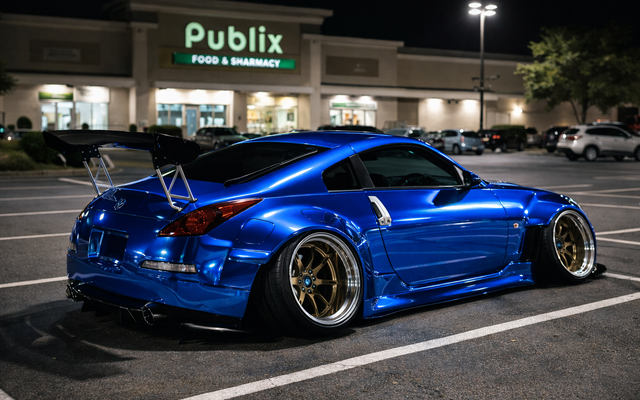
In the demanding arena of contemporary professional drifting, victory is no longer purely a result of raw torque or driver bravado. Instead, it has evolved into a multifaceted engineering challenge that necessitates a scrupulous fusion of selecting a proven chassis, arming it with the highest-quality drift-spec parts, and, most essentially, comprehending its real-time performance on the track through sophisticated vehicle dynamics analysis tools. This comprehensive handbook functions as your master plan starting from the very first concept of a competition vehicle through to the final data-informed refinements that turn a strong car into a repeatable champion. We will thoroughly explore the precise engineering of vehicle alignment optimization, demonstrating how a state-of-the-art suspension tuning tool like a dedicated telemetry system eradicates approximation and provides unparalleled insight into your vehicle's actual performance.
The cornerstone of any successful drift machine is, indisputably, the base vehicle itself. Several platforms have attained iconic standing within the global oversteer scene due to their built-in handling characteristics, robust design, and the immense availability of performance parts available. Choosing the optimal platform is the primary and most crucial selection a builder will make. To illustrate, the the E36 generation BMW is commonly accepted as perhaps the the best all-around drift platforms of the modern era. Its excellent 50/50 weight distribution, coupled with a rear-wheel-drive configuration and extremely reliable six-cylinder motors, creates a car that is both accessible for beginners and highly capable in the control of a professional competitor. The next step of this philosophy, the E46 model BMW, builds upon these strengths with a increasingly developed structure, increased track for improved stability, and even a greater degree of turning capability as standard from the OEM. Another dominant platform in the professional circuit is the Chevrolet Corvette C6.
This American track weapon introduces a particular array of advantages to the drifting sport, including a lightweight aluminium structure, a backwards-positioned transaxle that helps create an ideal front-to-rear mass ratio, and the tremendous torque of a big LS-series V8 engine. This fusion makes it an complete monster on track, capable of entering and sustaining long drifts with seemingly minimal application of power. For those seeking outstanding bang-for-the-buck, the 350Z model Nissan excels as a prime choice. It comes from the manufacturer with a robust platform, a decent OEM LSD, and the smooth V6 engine that offers plenty of performance for practicing and moving up in the discipline. Its newer version, the 370Z model, presents further refinements in chassis stiffness, suspension design, and peak powerplant performance, establishing its position as a common selection among serious competitors. Other iconic cars that deserve attention encompass the lightweight rotary-powered Mazda FC RX-7, the ubiquitous Nissan S13, the American SN95 generation Mustang, the more recent E90 3 Series, and the compact yet incredibly playful and teachable Mazda Miata. Every single one of these chassis gives a different array of attributes, challenges, and potentials, but they all have in common the fundamental components necessary to become a competitive drift car.
However, selecting the right platform is just the starting point. To access the full capability of any of these cars, substantial modifications to the steering and suspension systems are absolutely essential. This is where the world of specialist tuning parts comes into sharp view. The single most transformative upgrade for a purpose-built drift machine is the fitting of a high-performance drift angle kit. These engineered systems, like those developed by performance brands like specialist manufacturers, are engineered to radically expand the car's available turning lock. A standard road car is highly restricted in how far its steering tires can turn, a safety trade-off for on-road use. In oversteer driving, conversely, maximum opposite lock is continuously required to manage and sustain a drift. An angle kit exchanges the OEM uprights, tie rods, and potentially suspension arms with components that permit the front tires to achieve steering lock beyond 70 or even 80 degs, as opposed to a average stock angle of around 40 to 50 °.
This tremendously expanded steering angle offers the pilot with dramatically enhanced command during a drift, enabling it to be much easier to start a slide, hold it through a sweeping turn, and transition smoothly from one angle to the opposite. The difference in controllability is truly transformative. Paired with a correctly specified steering kit is the every bit as critical enhancement to the vehicle's spring and damper setup. Off-the-shelf or including expensive street dampers are simply not intended for the unique and harsh requirements of competitive oversteer. A dedicated pair of suspension units is of utmost importance. These specialized dampers incorporate specific damping rates and spring stiffness that are tuned for the extreme load shifting that is typical of drifting. When a pilot begins a drift, the car's inertia is thrown forcefully to the outer of the bend. Proper competition suspension manage this shift in a consistent fashion, enabling the car to stabilize promptly and providing the pilot precise feel through the controls and seat. They furthermore provide precise adjustment of ride height, shock absorber firmness, and weight balance, which are all fundamental elements of optimizing the vehicle's handling to a specific track or driving approach. As a system, a top-tier angle modification system and a expertly chosen pair of performance adjustable dampers constitute the undeniable mechanical cornerstone upon which all future refinement is based.
Once the fundamental components is in place, the subsequent critical phase in the build is the meticulous adjustment of the vehicle's alignment. This is the domain of car suspension tuning, a procedure that can seem intimidating to the newcomer but is, in practice, the defining factor to converting a collection of fast pieces into a cohesive and predictable vehicle. The most critical aspect of tuning for oversteer is certainly camber. Camber is the tilt of the tire compared to the vertical plane when observed from the forward of the vehicle. When the upper part of the wheel is leaning towards the car, this is known as negative camber. In drifting, an inward tilt on the front wheels is universally used and is seen as critical. The logic is intrinsically related to vehicle dynamics.
When a chassis is turning at extreme sideways angles, the body rolls to the outside of the bend. This body roll makes the outer steering tire to diminish its ideal grip area with the tarmac. By adding negative camber, the wheel is pre-leaned to counteract this tilt. As the car rolls into the bend, the tire gains a better contact patch against the track, optimizing its bite at the precise time when it is absolutely essential for control. Usually, front axle camber settings for a serious sliding vehicle range from approximately -3 degrees to as extreme as -5 degrees or even greater, contingent on the specifics of the car configuration, compound type, and driver style. The rear axle tires also employ negative camber, but the settings are typically more modest and less aggressive than the front axle. Excessive negative camber at the rear can result in the chassis extremely loose and difficult to manage on throttle use, as it diminishes the usable grip area of the driven tires during straight-line acceleration. Therefore, rear camber settings are frequently in the ballpark of -1 degree to -3 degrees, finding a careful compromise between offering sufficient side bite to assist in entering and sustaining the angle while simultaneously keeping usable hook-up for exiting the bend. camber angle is only one part of the broader suspension geometry equation, which additionally encompasses toe angle, caster angle, and steer correction adjustment.
Toe refers to the angle of the tires when looked at from the top. Inward toe means the front edges of the wheels are nearer together than the trailing edges, while outward toe means the reverse. For drifting, a small amount of front axle negative toe is frequently employed to sharpen the initial directional feel, making the vehicle feel more agile and eager to begin a drift. Rear toe is generally set to neutral or a extremely slight amount of positive toe to encourage predictability under acceleration. self-centering is the frontwards or rearward inclination of the kingpin axis when viewed from the lateral of the chassis. Increased caster enhances feedback and high-speed confidence, and it also adds to inward lean increase during cornering, which is highly useful. Setting these values is a intricate interaction where a change to one value can and often will impact the others. The traditional process for tuning a car's alignment for competition has for a long time been a time-consuming process of trial and error. A tuner or crew would make a change based on a hunch, test the car on track, depend on the pilot's subjective perception and comments, and then introduce an additional change. This loop would iterate time after time until the chassis felt "acceptable" or the allotted testing session ran out. This methodology is not just exceptionally slow in terms of hours and tires, fuel, and parts, but it is also fundamentally flawed.
Pilot perception is a infamously unreliable data source, affected by many variables such as fatigue, changing drift telemetry software track grip levels, ambient heat, and simply the mood of the operator on that given day. What feels "loose" on one lap might feel "pushing" on the subsequent pass, causing contradictory data and counterproductive tweaks. This traditional limitation in chassis setup is specifically where state-of-the-art engineering tools has intervened to completely change the methodology.
The advent and integration of specialized drift telemetry software has ushered in a radically different paradigm for engineering and refining competitive drift cars. This new generation of platforms, showcased by innovative products like GripDial, function by directly measuring the real-time physical behavior of the vehicle as it is operated on the track. In contrast to relying on subjective feel, these tools gather objective data on key parameters such as suspension travel, wheel speed, lateral and longitudinal g-forces, steering angle, and throttle and brake application. This acquired telemetry is then interpreted by advanced algorithms that can plot and decode the metrics in a clear manner. For the very first time, engineers and builders can visualize specifically what the chassis is exhibiting at every millisecond of a drift. This capability transforms the entire alignment optimization procedure. Think about the particular task of optimizing the front camber for a specific chassis. Rather than applying a adjustment from -3 degrees to -3.5 degrees and then driving multiple laps to try and "feel" a improvement, a telemetry system can provide instant and clear information. The software can show visually how the wheel's loading is behaving during the critical phases of a slide: turn-in, holding the angle, and changing direction. It can demonstrate if the current angle is enabling the steering tire to achieve ideal loading or if the compound is overloaded on its outer edge.
The system can then make data-driven recommendations for adjustment. Perhaps the telemetry reveals that the tire is still overworking its outer shoulder at -3.5 degrees of camber, implying that even more inward lean, say -4 degrees, might be advantageous. Alternatively, the data might indicate that the tread is failing to achieving temperature or that the inner edge is degrading unevenly, which could suggest that there is too much inward lean and a small lessening back to -3.2 degrees would be more optimal. This level of accuracy and useful intelligence was simply unattainable in the era of solely seat-of-the-pants setup.
The benefit of utilizing a dedicated vehicle dynamics tool reaches far beyond just setting camber. It functions as an invaluable suspension tuning guide that is specific to your exact vehicle. When setting the damping values on vehicle dynamics tool your suspension, rather than relying on imprecise guidelines or copying another driver's settings, you can employ the telemetry to analyze how the car is behaving in relation to your adjustments. The application can show the wheel movement path over a section of track, showing if the dampers are managing the weight transfer optimally or if they are allowing the chassis to bounce too much after a transition. It can assist in pinpointing problems like excessive compression or topping out, permitting you to make educated adjustments to spring preload, rebound/compression values, or ground clearance. This approach translates just as well to the drift suspension tuning guide intricate process of suspension geometry optimization. In addition to camber angle, the software can give data into how changes to toe and caster are affecting the car's handling during various phases of a drift. For instance, it can assist you to determine the optimal amount of front axle negative toe for your particular steering setup and driving style by showing the response time of turn-in response and the consistency of the car at full steering angle. This makes the software an extremely powerful drift suspension tuning guide that is actively informed by the live behavior of your specific chassis on the tarmac. It elevates the complete endeavor from a mysterious craft into a methodical development exercise.
Moreover, the utility of a tool like data acquisition is not confined to experienced tuners with vast resources. For the grassroots competitor, it functions as an incredible force multiplier. It in essence gives the builder with the analysis of a professional suspension specialist without needing the associated overhead. It speeds up the tuning process by delivering unambiguous solutions to challenges that would otherwise take years of experimentation to solve. A driver can understand how their particular vehicle responds to different adjustments, developing a more intuitive knowledge of vehicle dynamics in the endeavor. It additionally opens up professional suspension engineering concepts, enabling every enthusiast with the ambition to perfect their machine to do so in a structured and effective manner. This is especially valuable in a activity like oversteer competition, where setup knowledge has historically been a closely guarded commodity among top crews. Today, that knowledge can be in the toolkit of every serious enthusiast.
In conclusion, the path to engineering and dialing in the ultimate high-performance sliding vehicle is a multi-faceted endeavor that seamlessly combines time-honored mechanical knowledge with revolutionary digital solutions. It commences with the informed selection of a legendary platform, followed by the application of essential performance parts like drift-spec angle modification systems and correctly selected performance suspension units. The process then progresses into the intricate phase of car suspension tuning, where settings like negative camber, toe, and caster are carefully adjusted to match the car's new capabilities and the pilot's specific technique. Ultimately, and what truly separates the today's process from the past, is the integration of a sophisticated suspension tuning application. This system eradicates the approximation and inefficiency of only seat-of-the-pants tuning by giving quantifiable, real-time information on how the car is truly behaving. It acts as an incredible diagnostic aid, a comprehensive alignment optimization handbook, and a master performance analyzer. Together, this holistic philosophy leads to that all component of the drift machine—from the choice of the car to the final adjustment on the suspension—is optimized for peak success on the circuit. It embodies the total evolution of the sport of drifting, merging physical pilot talent with surgical suspension engineering to build the ultimate competitive vehicles attainable.